
STORY OF THE LAND
Starting from Scratch
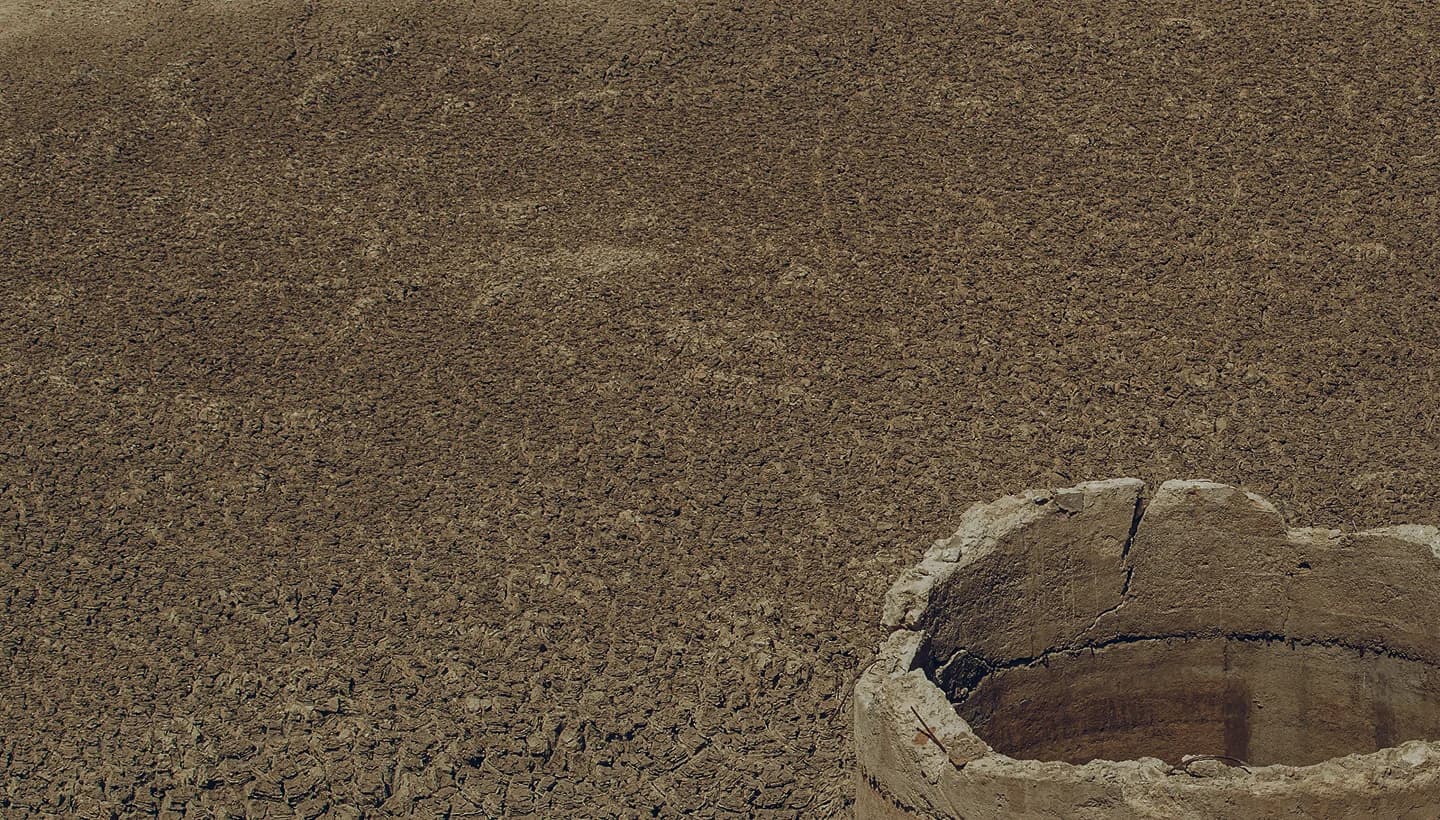
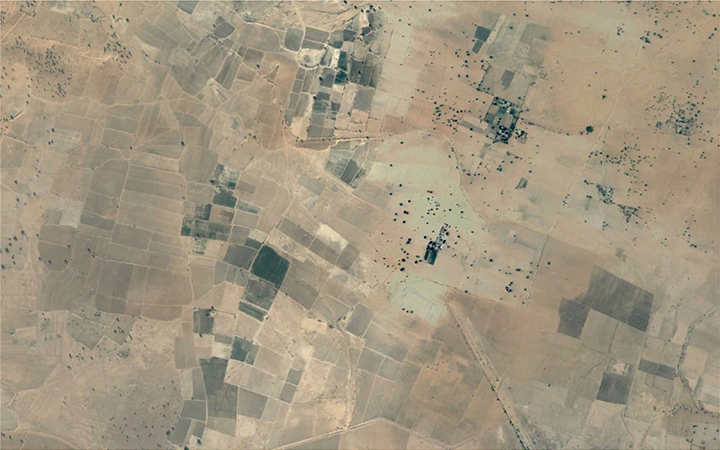
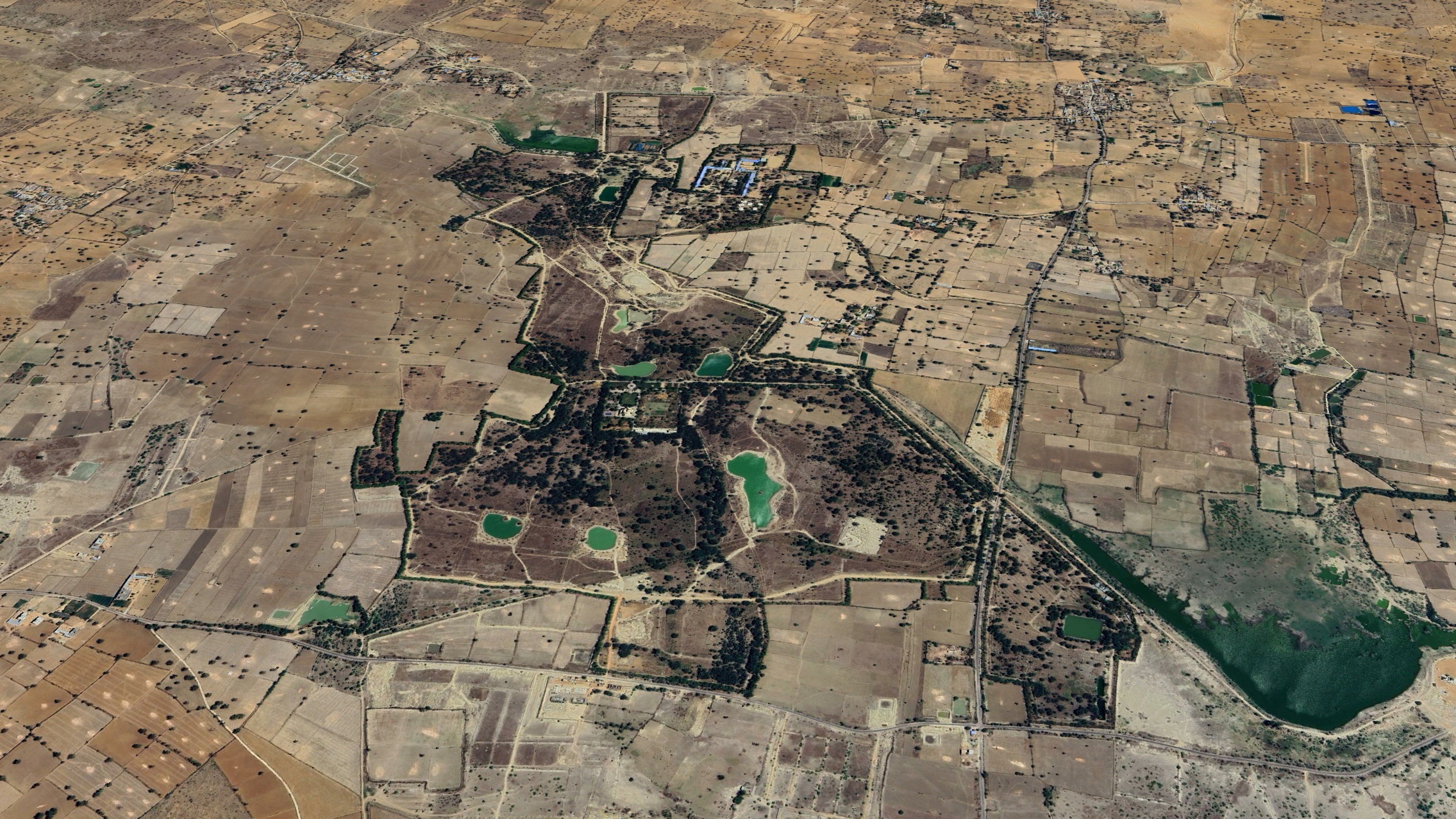
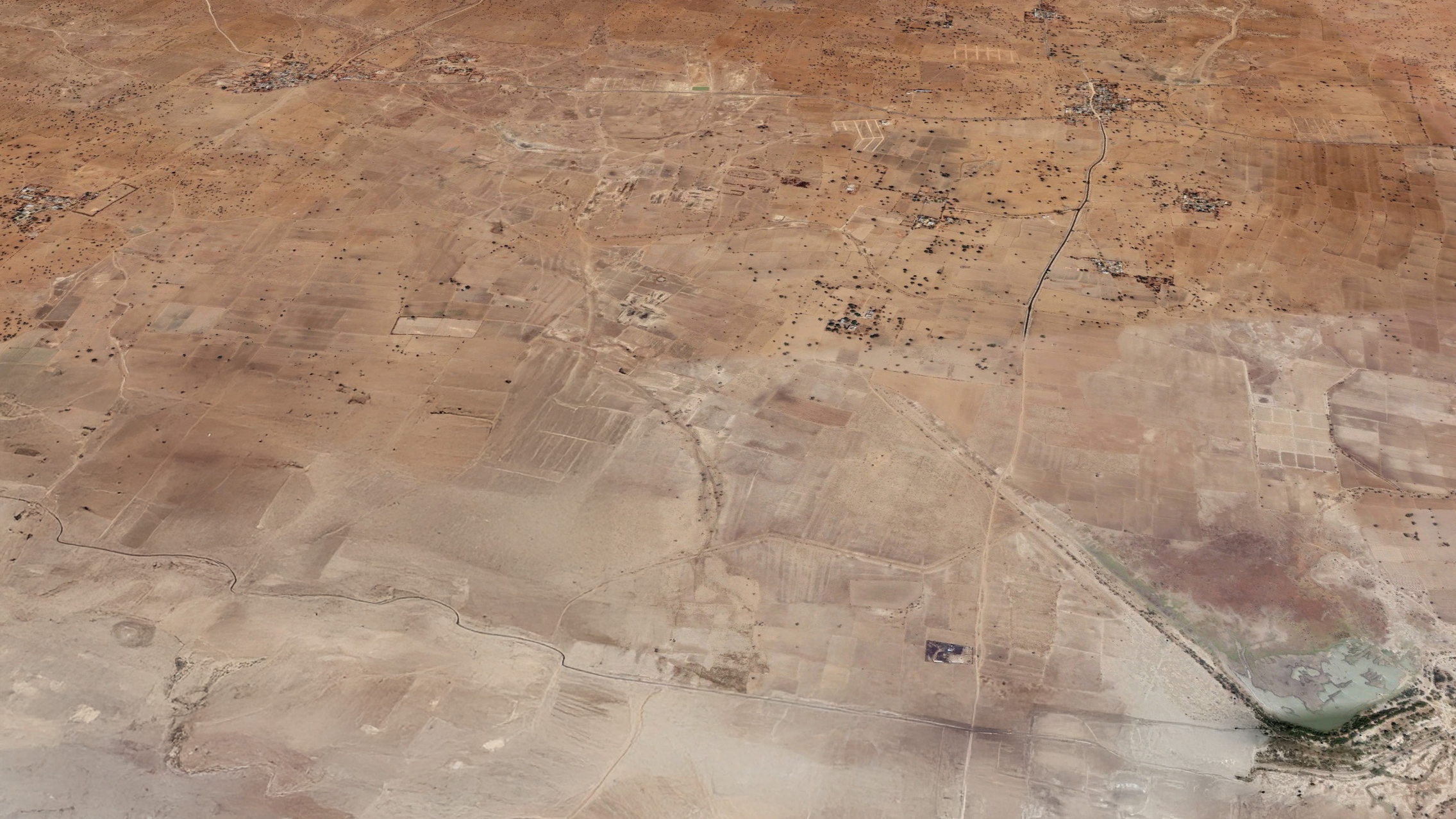
Dhun is situated on 500 acres of degenerated land that had no water, less than 30 trees and a dry saline expanse that was unfit for agriculture. We conducted an in-depth study of the geography, hydrology, topography, atmosphere, soil types, agriculture and indigenous vegetation that existed in and around the site for decades.
Regenerating Soil and Water
Over 200,000 trees have been planted using the Japanese Miyawaki method and 100,000 more using conventional methodologies which include 4 food forests. We worked on restoring historic water systems, built 9 water bodies with a harvesting capacity of 600 million litres of rainwater.
Watch Film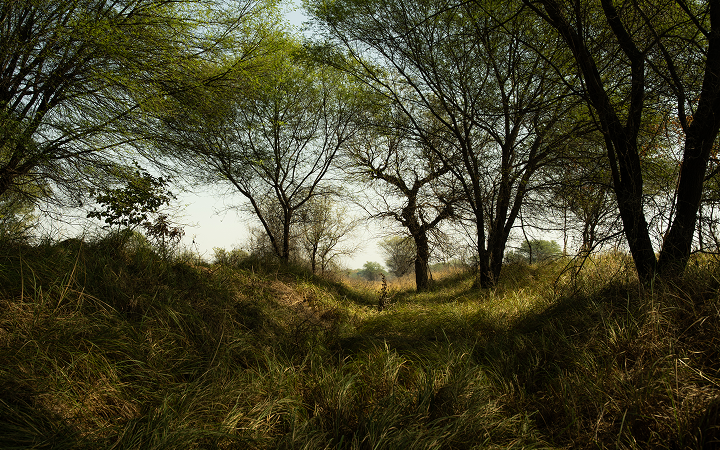
Life Returns to Dhun
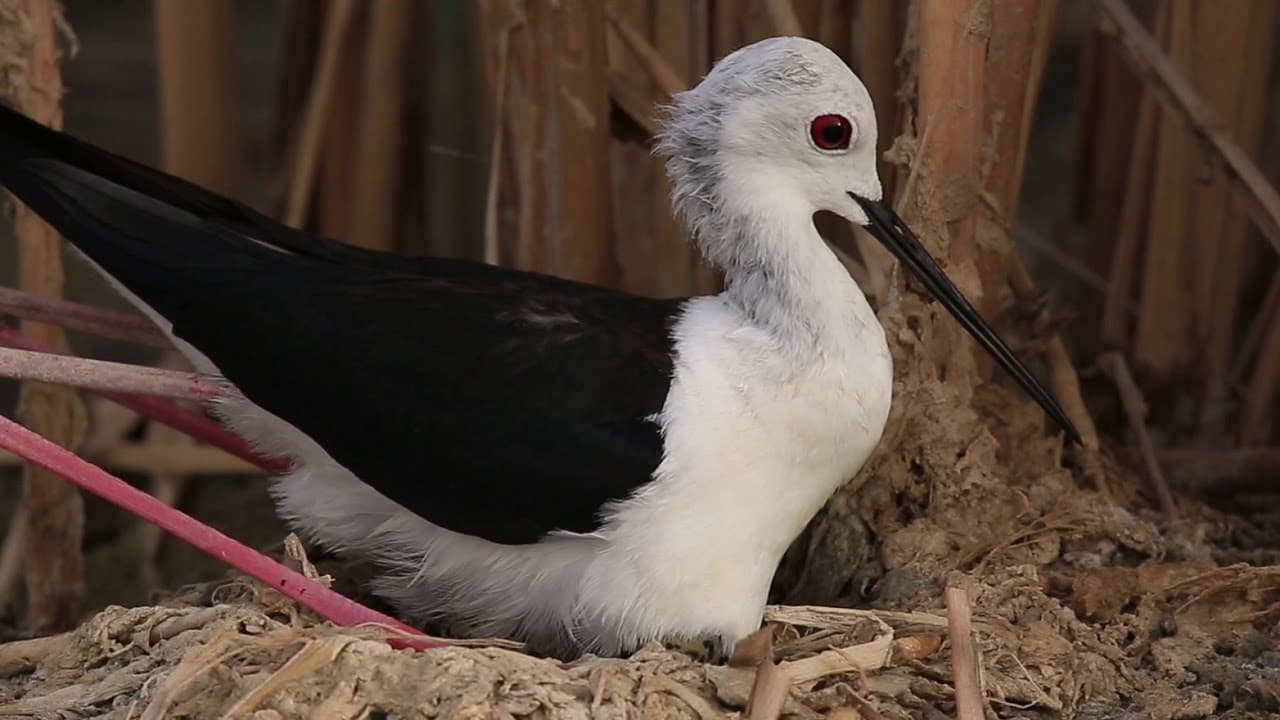
We now have over 180 species of resident and migratory birds including the vulnerable Common Pochard and Southern Grey Shrike, and the near-threatened White-eyed Pochard. Thousands of invertebrates, mammals and reptiles have also made this land their home, including the vulnerable Indian Flapshell Turtle.
Dhun’s Cooling Effect
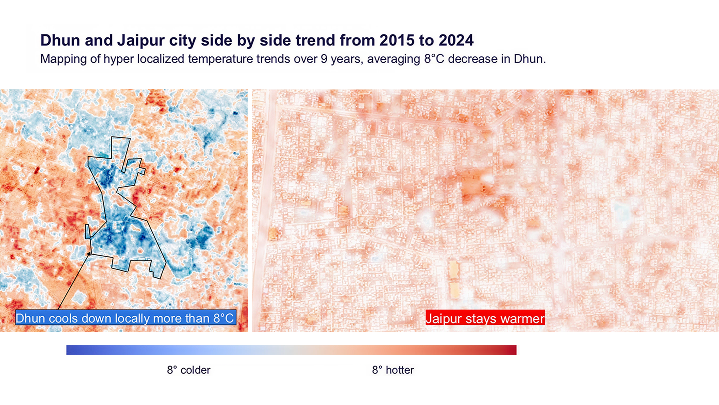
Over the last decade, we have mapped temperature changes across Jaipur to understand the impact of ecological restoration at Dhun. The study shows that the land here has cooled by up to 8°C, reflecting how interconnected systems of soil, water, and vegetation help the land cool and sustain itself.
500 acre
bioreserve
300,000+
trees
10 fresh
waterbodies
180+ bird
species
4 food
forests
8° C
Cooler
IMPACT BEYOND DHUN
Dhun designs collaborative models that pool learning, intent, and resources to create measurable environmental and social impact even beyond Dhun.
Securing Water at Source
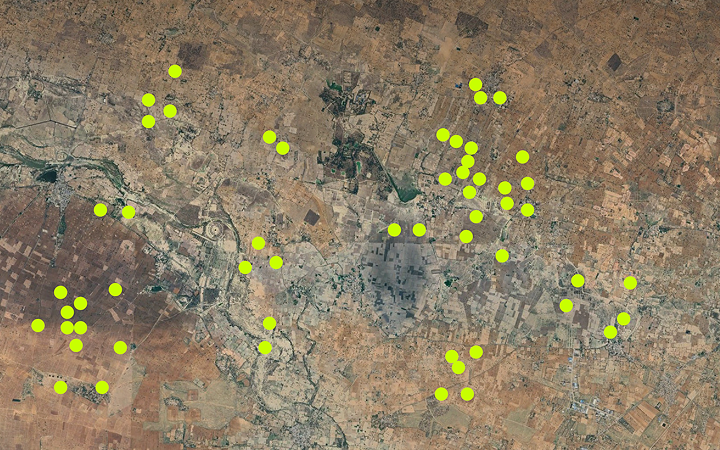
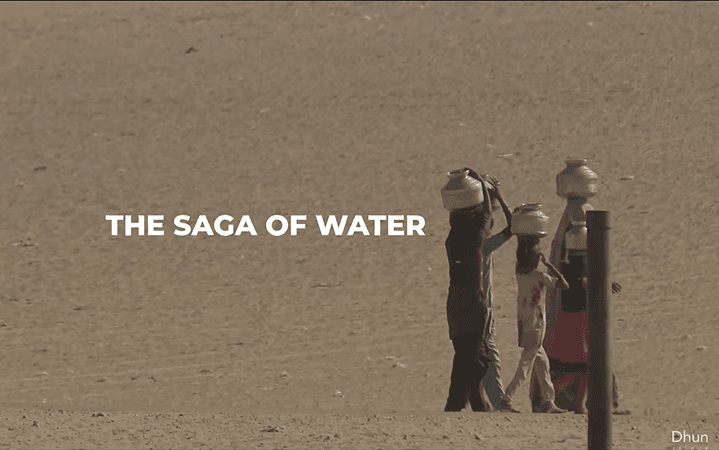
In Jaipur’s water-stressed peri-urban region, Dhun studied the 75 sq km watershed to understand water flow and build long-term drought resilience. This research shaped the Water Project, developed in collaboration with The I Love Foundation and Deshpande Foundation.
So far, 60 rainwater harvesting ponds have been built on private farmlands. Each captures around 2.5 million litres of rainwater annually, improving irrigation reliability, reducing runoff, and supporting groundwater recharge. The long-term goal is to create 1,000 ponds across the watershed.
Water ProjectRestoring Shared Landscapes
Dhun works with local communities to revive degraded common lands. Through the Forest Project, community-led plantations have restored grazing lands and other vulnerable sites, with over 5,000 native trees planted so far and a long-term goal of 1 million.
Planting is supported by deep soil preparation and ongoing care, led by local stewards. This approach improves soil health, strengthens fodder systems, and rebuilds native biodiversity while ensuring that the ownership and access remains within the community.
Forest Project